

Why Havanese Puppies Change Colors — And Why It’s Completely Normal
One of the most enchanting traits of the Havanese breed is their ability to change colors as they grow. Many puppies are born one shade, only to lighten, darken, or transform entirely within their first year. This magical shift is part of their genetics, especially influenced by the breed’s unique “silvering” and dilution genes.
Whether your puppy begins life jet black, rich chocolate, cream, sable, or anywhere in between, their adult coat may surprise you—in the best way. These changes are completely natural and part of what makes the Havanese so special and unique.
Below, you’ll find detailed infographics that break down why, how, and when these color changes happen, along with examples to help you understand what to expect as your puppy grows.

Why do Havanese puppies change color?
One Typical Havanese’s Color Transformation
Cosmo
Cosmo: birth to 4 years old


Gracie - One of our Beautiful Chocolates
Gracie is a wonderful example of how puppies change their coat. She is also a perfect puppy to see how CHOCOLATE Havies’ eyes differ from the standard of black nose > black eyes. Chocolates can have grey, green, yellow, and brown eyes and various colors in-between.
Standard Havanese vs. Chocolate
Explained


Go to: www.felici-animali.be
They have the most complete info on the Havanese breed.
European Reds
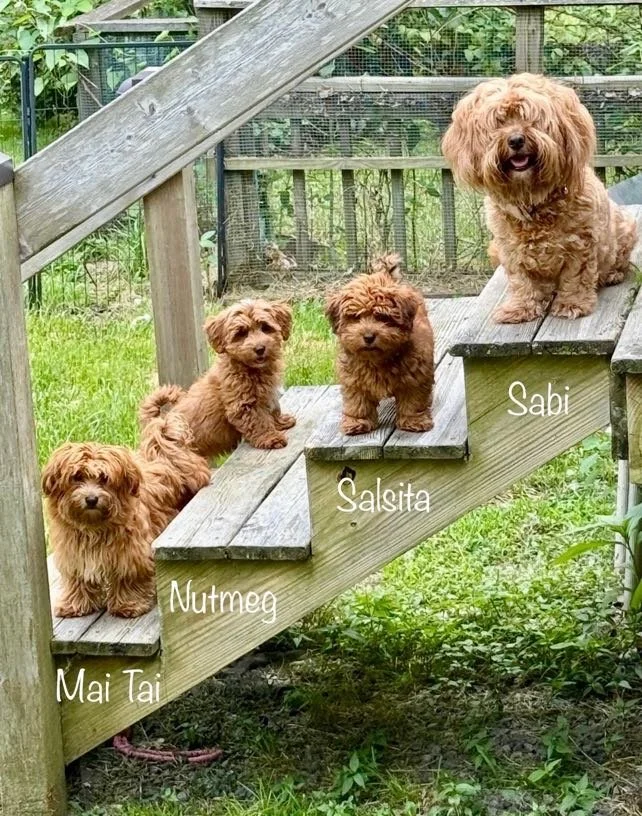
If you've ever seen a European Red Havanese in person, you already know. That deep, warm, richly pigmented coat stops people in their tracks. It's one of the most sought-after colors in the breed, and for good reason.
But here's something worth understanding before you go looking for one.
Color change is common in Havanese. Really common.
Most Havanese owners are surprised to learn just how dramatically their puppy's coat can shift in the first year of life. A puppy that comes home looking chocolate, gold, or red can look entirely different by their first birthday. Reds are especially known for this. Many fade significantly, lightening to a cream or pale apricot that barely hints at the rich color they had as puppies. It happens fast, and it can be disappointing if you weren't expecting it.
This is not a flaw. It's simply the nature of the genetics in the breed. But it's something every buyer deserves to know.
So what makes a European Red different?
European Red Havanese come from specific European lines where color depth, coat quality, and structural soundness have been carefully prioritized for generations. These dogs are bred with intention. The result is a Havanese that carries that gorgeous, rich red coat well into adulthood — the color you fall in love with as a puppy is the color that stays with you.
It's not just about looks, either. The same careful, quality-focused breeding that produces that stunning coat also produces dogs with excellent temperament, solid structure, and the gentle, loving personality the Havanese breed is known for.
They are rare. And they are worth it.
True European Reds from quality lines are not easy to find. At Fly Havanese of New England, we are proud to work with these exceptional dogs and share them with families who truly appreciate what makes them special.
If you'd like to learn more about our European Reds or find out about current and upcoming availability, we'd love to hear from you.